

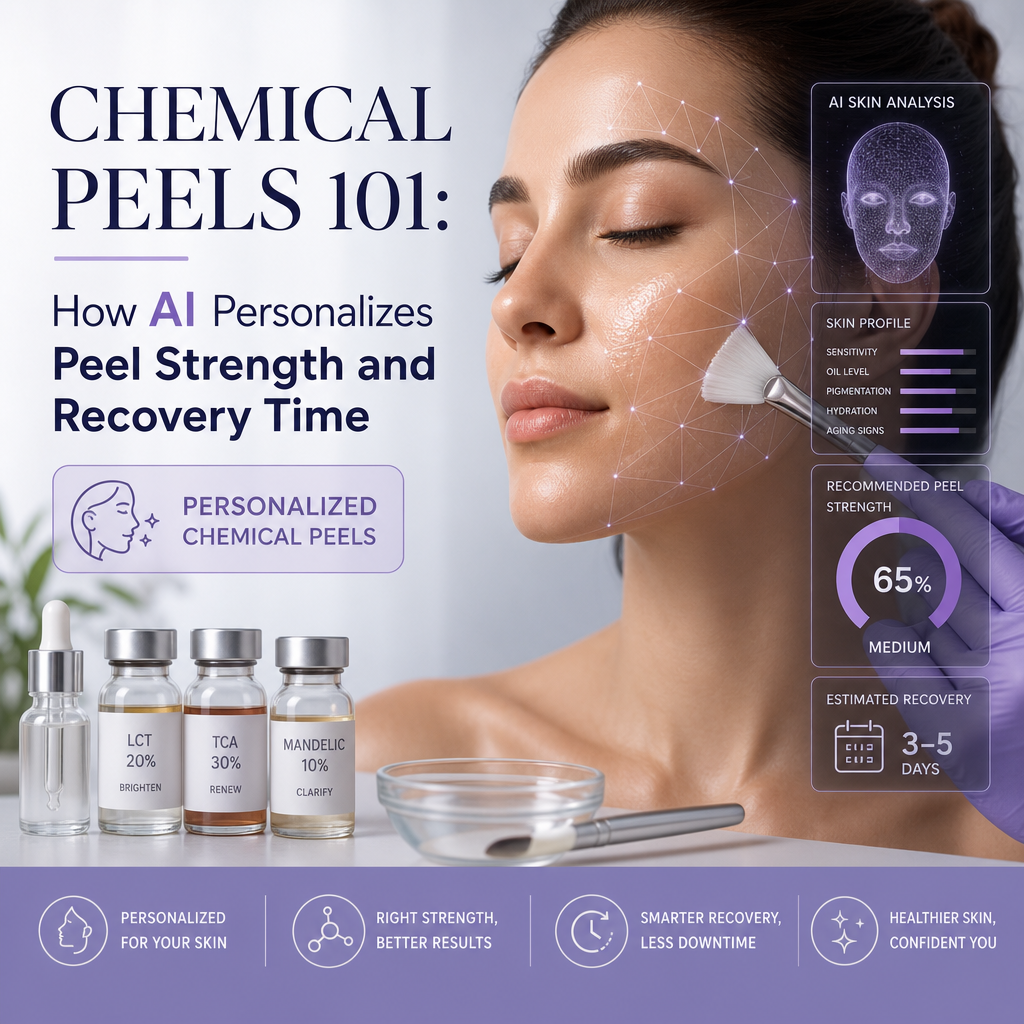
Chemical Peels 101: How AI Personalizes Peel Strength and Recovery Time
Chemical Peels 101: How AI Personalizes Peel Strength and Recovery Time
Chemical peels are a popular skin-resurfacing treatment used to treat fine lines, acne scars, pigmentation, and uneven texture. Traditionally, clinicians decide peel strength and expected recovery based on experience and a few clinical factors. Now, artificial intelligence (AI) is changing that process—helping practitioners personalize both the intensity of a peel and the likely downtime for each patient.
What is a chemical peel and why personalization matters
Chemical peels use acids or enzymes to remove damaged outer skin layers, prompting regeneration. Peels are commonly classified as:
- Superficial (light) — targets epidermis, minimal downtime
- Medium — reaches upper dermis, several days to two weeks of recovery
- Deep — penetrates deeper dermis, significant downtime and higher risk
Patient outcomes depend on many variables: skin type, pigmentation risk, history of scarring or cold sores, medications, and lifestyle. Over- or under-treating can cause extended recovery, hyperpigmentation, or insufficient results. Personalization aims to maximize benefit while minimizing risk.
How AI personalizes peel strength
AI systems can analyze multiple data sources to recommend a tailored peel protocol. Key inputs include:
- High-resolution facial images (standardized lighting and angles)
- Fitzpatrick skin type and melanin index
- Medical history (medications, conditions, previous procedures)
- Lifestyle and environmental factors (sun exposure, smoking)
- Objective skin measures (hydration, transepidermal water loss, elasticity)
Using machine learning models—often convolutional neural networks (CNNs) for image analysis and ensemble or regression models for clinical data—AI can:
- Predict skin response to different acids and concentrations
- Recommend peel depth or acid strength likely to achieve desired results
- Suggest pre-treatment steps (retinoid cessation, antiviral prophylaxis)
The result is a data-driven protocol that matches the chemical agent and strength to the patient’s unique skin biology and risk profile.
Predicting recovery time with AI
Recovery time varies widely. AI models trained on large datasets of previous treatments can forecast:
- Typical inflammatory response and peak redness timeline
- Probability and duration of desquamation (peeling)
- Risk of post-inflammatory hyperpigmentation (PIH) and scarring
- Overall downtime required before returning to social/work activities
These predictions let clinicians set realistic expectations and schedule follow-up care. They can also inform patients’ decisions—if AI estimates a 5–7 day downtime versus an alternative treatment with 1–2 days, patients can weigh priorities.
Practical benefits for patients and clinicians
AI-driven personalization offers several advantages:
- Reduced complication rates by avoiding overly aggressive peels in at-risk skin
- Improved patient satisfaction through accurate recovery timelines
- More consistent treatment outcomes across providers
- Efficient triage: identifying patients who need patch tests or alternative therapies
AI also supports documentation and consent by generating individualized reports that explain recommended strengths and expected healing trajectories.
Limitations and safety considerations
AI is a tool, not a replacement for clinical judgment. Important caveats:
- Model quality depends on training data; biased or limited datasets reduce accuracy for underrepresented groups.
- Image quality and standardized capture protocols are crucial for reliable predictions.
- Regulatory approval, transparency about algorithms, and clinician oversight are necessary.
- Data privacy and informed consent must be handled carefully when patient images and health data are used.
Patients should choose clinics that combine validated AI tools with experienced practitioners and clear explanations of how recommendations are made.
Tips for patients considering AI-personalized peels
- Ask whether the clinic uses validated AI models and how they collect/secure your data.
- Confirm that the AI recommendation is reviewed by a qualified clinician.
- Follow pre-treatment and post-treatment instructions—AI predictions rely on those conditions being met.
- Consider a patch test if you have darker skin or a history of PIH.
- Discuss downtime needs and alternatives if AI estimates longer recovery than you can accommodate.
Conclusion
AI is reshaping chemical peel planning by integrating images, clinical data, and predictive modeling to personalize peel strength and recovery time. When used responsibly by trained clinicians, these tools can improve outcomes, set realistic expectations, and reduce complications. As with any medical innovation, transparency, data diversity, and human oversight remain essential to safe, effective personalization.
