

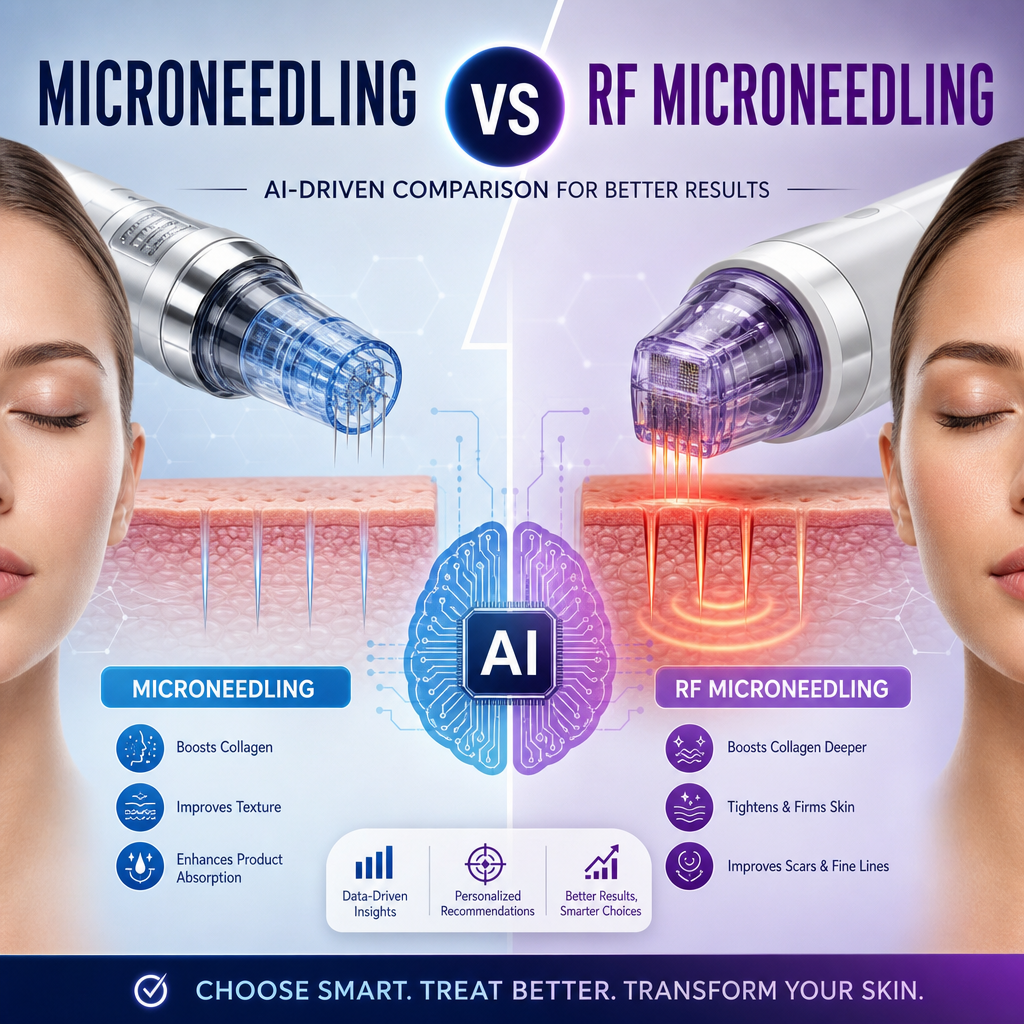
Microneedling vs RF Microneedling: AI-Driven Comparison for Better Results
Microneedling vs. RF Microneedling: An AI‑Driven Comparison for Better Results
Choosing between microneedling and RF microneedling can feel overwhelming. Both treatments stimulate collagen and improve skin texture, but they work differently and suit different concerns. This article provides an AI-driven comparison to help you understand how each treatment performs, what outcomes to expect, and how artificial intelligence can improve results.
What is microneedling?
Microneedling uses tiny sterile needles to create controlled micro-injuries in the skin. These micro-injuries trigger the body’s natural wound-healing response, increasing collagen and elastin production. Traditional microneedling is effective for:
- Fine lines and pore reduction
- Superficial texture and mild acne scarring
- Enhancing topical product absorption
Recovery is relatively quick: redness and mild swelling typically resolve in a few days.
What is RF microneedling?
RF microneedling combines the mechanical action of microneedles with radiofrequency (RF) energy delivered below the skin surface. The RF energy heats the dermis, tightening tissue and stimulating deeper collagen remodeling. RF microneedling is often recommended for:
- Moderate to severe acne scarring
- Skin laxity on the face, neck, and body
- Deep wrinkles and stretch marks
Recovery can be a bit longer than traditional microneedling due to deeper dermal heating, but results are usually more pronounced and longer-lasting.
Key differences at a glance
- Mechanism:
- Microneedling: creates micro-injuries to stimulate healing.
- RF microneedling: combines micro-injuries with thermal stimulation.
- Depth and intensity:
- Microneedling: superficial to mid-dermal.
- RF microneedling: reaches deeper dermal layers with controlled heat.
- Best for:
- Microneedling: texture, pores, mild scarring.
- RF microneedling: deep scarring, laxity, significant wrinkle reduction.
- Downtime:
- Microneedling: 2–5 days.
- RF microneedling: 3–7 days depending on intensity.
How AI improves treatment selection and outcomes
Artificial intelligence (AI) is increasingly used in aesthetic medicine to personalize and optimize treatments. Here’s how AI can make the microneedling vs. RF microneedling decision smarter and the results better:
- Personalized assessment: AI-driven skin analysis tools evaluate photos to quantify scar depth, skin laxity, pigmentation, and texture. These metrics guide practitioners toward the most appropriate modality.
- Predictive outcomes: Machine learning models analyze large datasets of before-and-after images to predict likely improvement for a given patient and treatment plan, helping set realistic expectations.
- Parameter optimization: AI can recommend optimal needle depth, RF energy, and treatment spacing based on patient-specific skin thickness and target concerns, reducing the risk of under- or overtreatment.
- Progress tracking: Automated image comparison and scoring provide objective progress reports across sessions, allowing clinicians to adjust protocols promptly.
- Safety monitoring: AI-assisted systems can flag unusual healing patterns or adverse responses early, improving patient safety.
Practical considerations before you decide
- Skin type and color: Both procedures can be safe for a range of skin tones, but RF microneedling may have advantages in reducing post-inflammatory hyperpigmentation risk due to precise energy delivery. Consult a provider experienced with darker skin tones.
- Pain and anesthesia: RF microneedling is often more uncomfortable than traditional microneedling; topical anesthetic or local anesthesia is commonly used.
- Cost: RF microneedling is typically more expensive due to equipment and complexity.
- Sessions needed: Multiple sessions are usually required for best results—traditional microneedling might need 3–6 treatments, while RF microneedling often yields noticeable improvement in 1–3 sessions.
Who is the ideal candidate?
- Choose microneedling if you have mild texture issues, large pores, or want a lower-cost option with minimal downtime.
- Choose RF microneedling if you have deeper acne scars, skin laxity, or want more dramatic tightening and long-term collagen remodeling.
- Consider an AI-assisted consultation to objectively evaluate which option will likely deliver the best outcome for your skin.
Conclusion
Microneedling and RF microneedling both stimulate collagen and improve skin appearance, but they differ in depth, intensity, and typical outcomes. Leveraging AI-driven analysis and treatment planning can help match the right procedure to your skin concerns, predict realistic results, and optimize safety. For the best outcome, consult a qualified clinician who uses objective assessment tools and can explain why one approach is preferable for your individual needs.
