

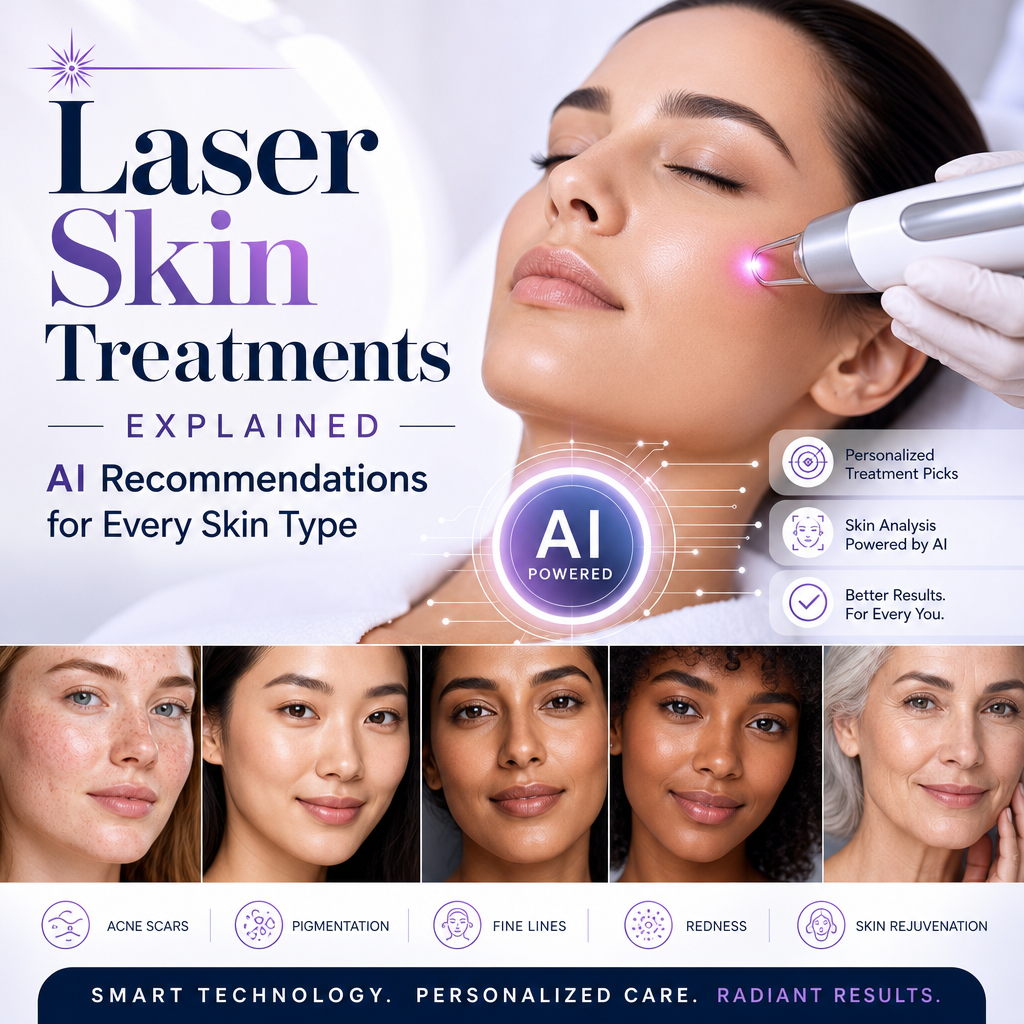
Laser Skin Treatments Explained: AI Recommendations for Every Skin Type
Laser Skin Treatments Explained: What AI Recommends for Every Skin Type
Laser skin treatments have become a cornerstone of modern dermatology and cosmetic care. Whether you’re targeting sun damage, acne scars, pigmentation, or hair removal, understanding the right laser for your skin type is essential. Here’s a clear, AI-informed guide to laser skin treatments and how to choose what’s safest and most effective for your skin.
How lasers work — the basics
Lasers deliver concentrated light energy that is absorbed by specific targets in the skin: water, hemoglobin, or melanin. This selective absorption allows lasers to either remove or remodel tissue, reduce pigment, or destroy hair follicles without broadly harming surrounding skin. Parameters like wavelength, pulse duration, and energy density determine the effect and risk profile.
Common types of laser treatments
- Ablative lasers (e.g., CO2, Er:YAG): Remove the top skin layers to treat deep wrinkles, scars, and severe sun damage. Recovery time is longer but results can be dramatic.
- Non-ablative lasers (e.g., Nd:YAG, Fraxel non-ablative): Heat deeper layers without removing the surface layer. Less downtime, more sessions required.
- Fractional lasers: Deliver microbeams to create controlled micro-injuries, promoting collagen while leaving healthy tissue intact for faster healing.
- IPL (Intense Pulsed Light): Technically not a laser but a broad-spectrum light used for pigmentation, broken capillaries, and mild photoaging.
- Q-switched and picosecond lasers: Target pigment (tattoos, melasma, lentigines) by delivering very short, high-energy pulses to break pigment particles.
- Diode and Alexandrite lasers: Common for hair removal; effectiveness varies by hair color and skin tone.
AI recommendations for every skin type
Modern AI models can synthesize research and clinical guidelines to suggest safer laser choices matched to Fitzpatrick skin types I–VI. Below are practical AI-informed recommendations:
Fitzpatrick I–II (very fair to fair)
- Best options: Ablative and non-ablative resurfacing (CO2, Er:YAG, Fraxel) and IPL for vascular and pigment issues.
- Rationale: Low melanin reduces risk of hyperpigmentation; more aggressive resurfacing is tolerated better.
- Cautions: Standard sun protection and post-procedure wound care remain essential.
Fitzpatrick III–IV (medium skin)
- Best options: Non-ablative fractional lasers, Nd:YAG for vascular lesions, and Q-switched/picosecond lasers for discrete pigmentation.
- Rationale: Moderate melanin increases risk of PIH (post-inflammatory hyperpigmentation); fractional and longer-wavelength devices reduce that risk.
- Cautions: Pre- and post-treatment use of topical lighteners (e.g., hydroquinone alternatives), strict sun avoidance.
Fitzpatrick V–VI (olive to deeply pigmented)
- Best options: Nd:YAG (1064 nm) for vascular and hair removal; conservative use of fractional non-ablative lasers; picosecond/Q-switched lasers for specific pigment issues with caution.
- Rationale: Higher melanin content absorbs more laser energy, raising PIH risk. Longer wavelengths (Nd:YAG) penetrate more safely and target deeper structures with less epidermal absorption.
- Cautions: Avoid aggressive ablative resurfacing unless performed by highly experienced providers; perform test spots; consider interval and conservative settings.
Pre-treatment checklist (AI-suggested)
- Schedule a consultation to evaluate skin type, medical history, and medications.
- Discontinue photosensitizing drugs and certain topical retinoids as advised.
- Begin sun protection and, for darker skin types, consider pre-treatment depigmentation protocols if indicated.
- Perform patch testing or test spots for darker skin.
Post-treatment care and safety
- Use broad-spectrum sunscreen daily and minimize sun exposure.
- Follow wound care instructions: gentle cleansing, topical antibiotics when prescribed, and moisturization.
- Expect redness, swelling, and peeling depending on procedure; contact your provider for signs of infection or prolonged hyperpigmentation.
- Consider maintenance treatments spaced per provider guidance.
Choosing the right provider
Laser outcomes depend heavily on operator skill and device quality. Look for board-certified dermatologists or plastic surgeons with specific laser experience, read before-and-after photos, and confirm the clinic uses up-to-date equipment and safety protocols.
Final thoughts
Laser skin treatments offer powerful tools for improving texture, tone, and unwanted hair or pigment — but the right choice depends on your skin type, goals, and risk tolerance. AI-backed guidance favors longer wavelengths and conservative settings for darker skin and supports more aggressive resurfacing for lighter skin types. Always consult an experienced clinician for personalized planning and safe, effective results.
