

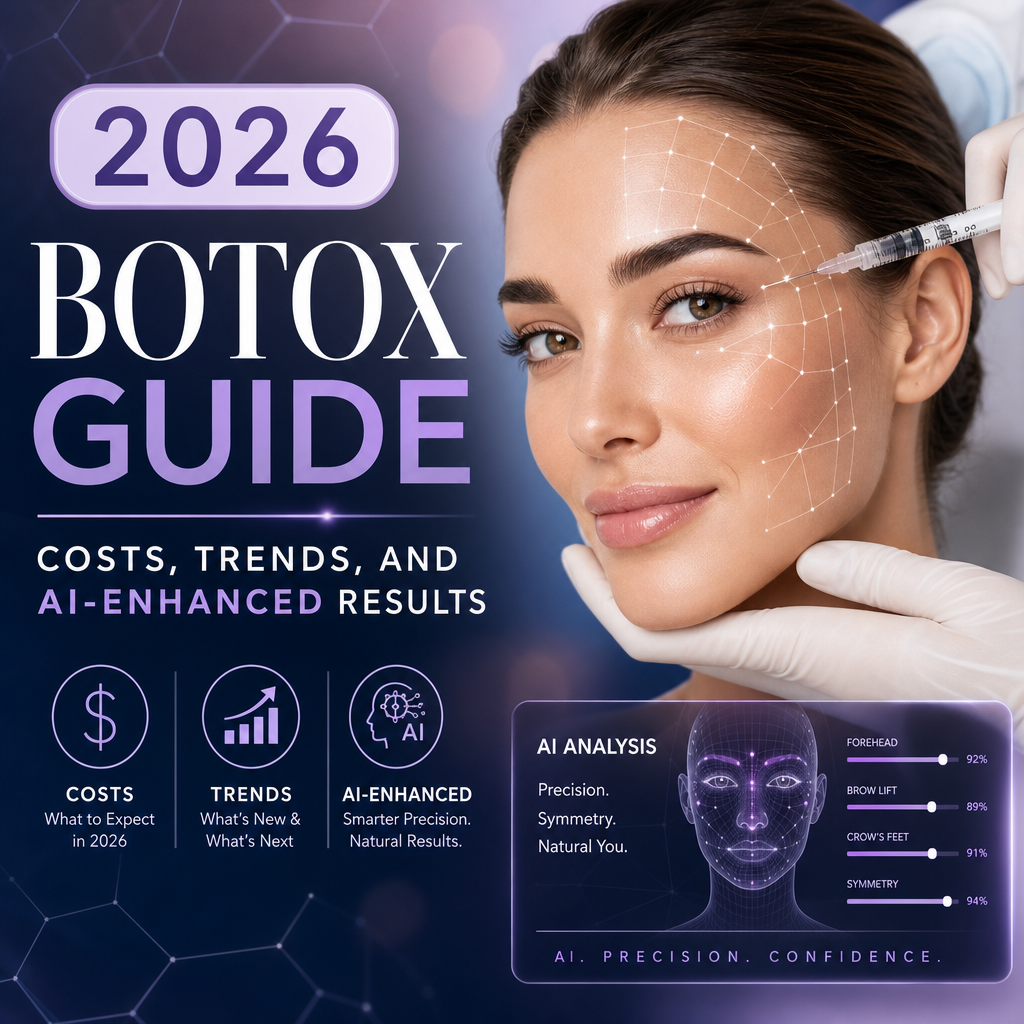
2026 Botox Guide: Costs, Trends, and AI-Enhanced Results
The Ultimate 2026 Guide to Botox: Costs, Trends, and AI‑Enhanced Results
Botox remains one of the most popular non‑surgical aesthetic treatments in 2026. As techniques evolve and technology—especially artificial intelligence—plays a larger role, patients can expect more personalized, predictable outcomes. This guide covers current costs, emerging trends, and how AI is enhancing Botox results so you can make informed decisions.
How Botox Works (Briefly)
Botox is a purified neurotoxin injected into targeted muscles to temporarily reduce muscle activity. That reduction smooths dynamic wrinkles—lines caused by facial movement such as frown lines, crow’s feet, and forehead creases. Effects typically appear within a few days and peak around two weeks.
2026 Botox Costs: What to Expect
Costs vary widely depending on geography, provider experience, clinic type, and treatment complexity.
Typical price ranges
- Per unit pricing (common in the U.S.): $12–$20 per unit in 2026.
- Average treatment cost: $250–$800 for cosmetic treatments (glabellar, forehead, crow’s feet). More extensive or combination treatments can exceed $1,000.
- International variation: Prices are generally lower in countries with lower healthcare costs and higher in major metropolitan centers or luxury clinics.
Factors that affect cost
- Provider expertise and reputation
- Number of units required (based on muscle strength and desired effect)
- Geographic location and clinic overhead
- Combination therapies (fillers, lasers, skin care)
- Follow‑up or maintenance sessions
Always ask for an itemized quote and clarification on unit versus area pricing.
Trends in Botox for 2026
The aesthetics landscape continues to shift. Key trends this year include:
- Natural, subtle results: The “no frozen face” aesthetic remains dominant. Microdosing and precise placement prioritize movement with softened lines.
- Preventative treatments: Younger adults in their late 20s and 30s seek Botox to slow deep wrinkle formation.
- Male and diverse patient uptake: More men and a broader range of skin types are pursuing treatments with tailored dosing.
- Combination approaches: Botox alongside energy devices, neuromodulators, and targeted skincare achieves layered rejuvenation.
- Micro‑Botox and meso‑Botox: Superficial low‑dose injections for skin texture, pore reduction, and sweat control continue gaining popularity.
AI‑Enhanced Botox: What’s New
Artificial intelligence has moved from experimental tools to mainstream clinical support systems in aesthetic practices.
Where AI helps
- Virtual try‑ons: Patients can preview expected outcomes using AI‑generated simulations, improving alignment between expectations and achievable results.
- Injection planning: AI can analyze facial expression data and muscle anatomy to suggest optimized injection sites and dosing patterns tailored to each patient.
- Predictive outcomes: Machine learning models use past treatment data to estimate longevity and likely results for individuals.
- Robotics and assisted devices: Precision delivery systems guided by AI improve consistency in high‑volume clinics.
- Post‑treatment monitoring: Apps track recovery, side effects, and outcome longevity, feeding data to clinicians for follow‑up adjustments.
Limitations and safeguards
- AI augments but does not replace clinician judgment. Human oversight remains essential.
- Simulations are probabilistic, not guaranteed. Results depend on individual anatomy and biological response.
- Data privacy and regulatory compliance are critical: ask how your images and data are stored and used.
Safety, Recovery, and Longevity
Botox is generally safe when performed by trained professionals. Common, temporary side effects include mild bruising, swelling, and headache. Rare but important risks include drooping eyelids or asymmetry—usually avoidable with proper technique.
- Onset: 2–7 days
- Peak: ~2 weeks
- Typical duration: 3–5 months (varies by individual and dose)
- Maintenance: Many patients schedule touch‑ups every 3–6 months
Always disclose medical history, medications, and prior aesthetic treatments during your consultation.
Choosing a Provider: Questions to Ask
- Are you board‑certified in dermatology, plastic surgery, or another relevant specialty?
- How many Botox procedures do you perform monthly?
- Can you show before/after photos of patients with similar concerns?
- How do you use AI or digital tools in treatment planning?
- What is your pricing structure—per unit or per area—and what’s included?
Final Notes
Botox in 2026 offers more personalized and predictable outcomes thanks to improved techniques and AI support. Costs remain variable, but understanding unit pricing, treatment scope, and the role of AI will help you set realistic expectations. Always consult a qualified professional who prioritizes safety and transparent communication.
