

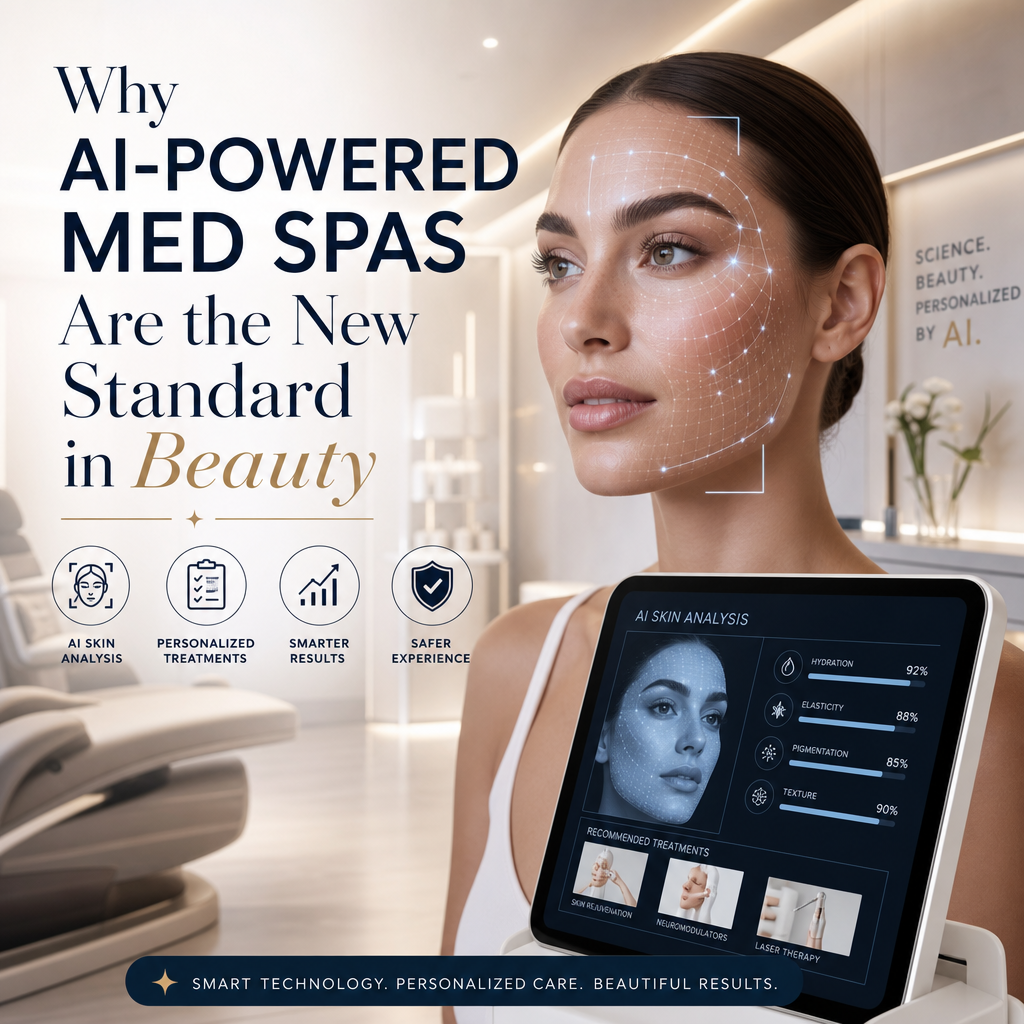
Why AI-Powered Med Spas Are the New Standard in Beauty
The Rise of Intelligent Beauty: Why AI‑Powered Med Spas Are the New Standard
The med spa industry is changing. Once defined by aesthetic treatments delivered by specialists following generalized protocols, it’s now adopting a smarter, data-driven approach. Intelligent beauty—where AI meets aesthetics—is no longer a novelty. AI-powered med spas are reshaping how clients experience consultations, treatments, and aftercare, and they’re quickly becoming the new standard.
What is an AI-powered med spa?
An AI-powered med spa combines traditional medical aesthetics with artificial intelligence technologies. These clinics use machine learning algorithms, image analysis, predictive modeling, and automation to enhance every stage of the client journey. From intake forms and skin assessments to personalized treatment plans and outcome tracking, AI systems augment clinician expertise rather than replace it.
Common AI technologies used today
- Image recognition for skin and facial analysis
- Predictive analytics to forecast treatment outcomes and downtime
- Chatbots and virtual assistants for booking and pre-visit triage
- Automated documentation and compliance support
- Remote monitoring tools for post-treatment follow-up
Why intelligent beauty matters
AI-powered med spas deliver a higher level of precision, personalization, and efficiency. As clients become more informed and expectations rise, med spas must offer results that are both measurable and tailored. Intelligent beauty addresses these needs by turning subjective assessments into actionable, repeatable processes.
Key benefits of AI-powered med spas
- Personalization at scale: AI analyzes skin type, lifestyle factors, and genetic data (when available) to create bespoke treatment plans.
- Improved outcomes: Predictive models help clinicians choose the right modalities, settings, and combinations to maximize results.
- Faster consultations: Automated imaging and analysis reduce time spent on manual assessments without sacrificing accuracy.
- Enhanced safety and compliance: AI can flag contraindications, drug interactions, and potential complications before a treatment begins.
- Better client engagement: Chatbots and follow-up reminders improve adherence to aftercare, boosting satisfaction and retention.
How personalization works in practice
During a consultation, a clinician can use a high-resolution imaging system that feeds data into an AI engine. The system evaluates pigmentation, texture, vascularity, and structural features, then suggests a ranked set of treatment options. These suggestions are evidence-based and come with confidence scores and expected timelines, giving clients clearer expectations.
Efficiency, safety, and trust
One of the biggest advantages of intelligent beauty is efficiency. Automated intake processes and intelligent triage cut administrative overhead, enabling practitioners to focus on patient care. Safety also improves because AI helps catch red flags—previous adverse reactions, medication conflicts, or unsuitable combinations of procedures—before they occur.
Trust is built when clients see measurable progress. With AI-powered tracking, before-and-after comparisons are standardized, and results are tracked over weeks and months. This transparency helps manage expectations and provides data for continuous improvement.
Challenges and ethical considerations
Despite the promise, integrating AI into med spas raises important considerations:
- Data privacy: Sensitive health and biometric data require robust security and clear consent practices.
- Algorithm bias: AI trained on non-representative datasets can underperform for certain skin tones or ages unless properly validated.
- Clinician oversight: Algorithms should assist, not replace, qualified practitioners. Final decisions must remain clinical.
- Cost and accessibility: Implementing AI tools can be expensive, potentially widening the gap between high-end and community clinics.
Addressing these challenges requires transparent governance, inclusive data sets, and ongoing clinician training.
What the future looks like
The trajectory for intelligent beauty points toward deeper personalization and integration. Expect to see:
- Hybrid consults combining AI-driven analysis with telemedicine follow-ups
- Expanded remote monitoring tools to support recovery and adherence
- More seamless patient experiences—from booking to outcomes tracking—powered by AI orchestration
- Greater use of real-world outcome data to refine algorithms and treatment protocols
As AI becomes more embedded in everyday practice, med spas that invest in responsible, client-centered technology will gain a competitive edge.
Conclusion
Intelligent beauty is transforming med spas from intuition-driven practices into precision-oriented experiences. AI-powered med spas offer personalized treatments, improved safety, and measurable results, raising the bar for client expectations. While challenges around privacy, bias, and cost remain, the benefits are compelling. For clinics and clients alike, the rise of AI in aesthetics signals a new standard—one where beauty is smarter, safer, and more tailored than ever before.
